
Lisa Chastain · Financial Emotional Intelligence
What if the biggest problem in your marriage isn't actually money?
What if it's the conversations you're not having, the emotions you're holding onto, or the things you've never felt safe enough to say out loud?
I've spent years helping people understand their relationship with money. And one thing I've learned is that what happens in our bank accounts is often a reflection of what's happening in our lives.
Our relationships. Our beliefs. Our fears. Our expectations of ourselves and each other.
Money is emotional before it's mathematical. And marriage might be one of the greatest examples of that.
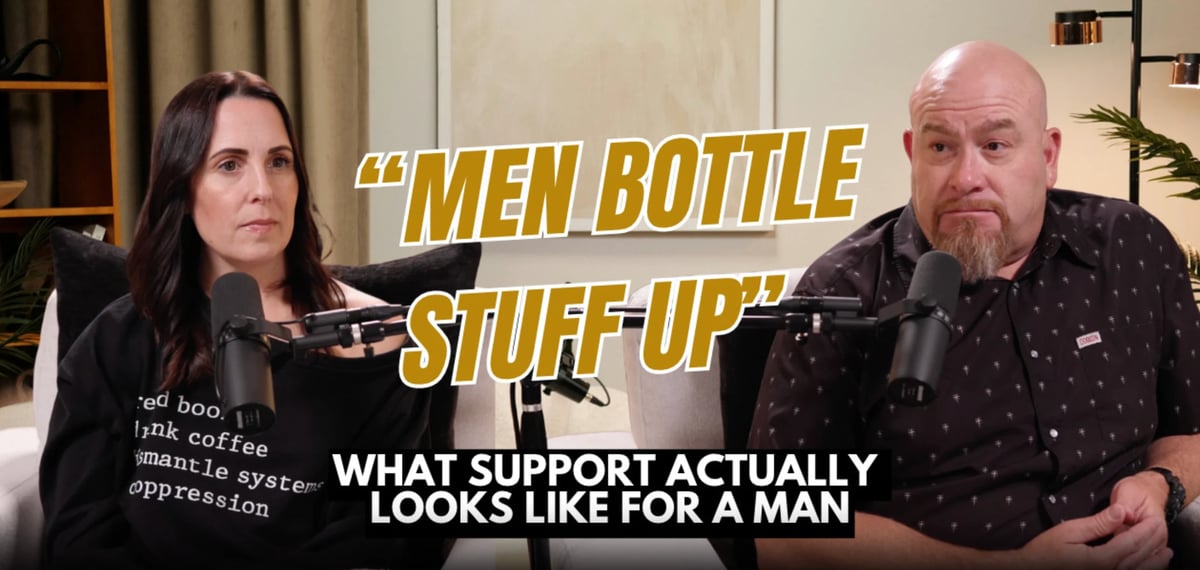
On a recent episode of Real Money with Lisa Chastain, I invited my husband, Jimmy, into the studio for a conversation about marriage, vulnerability, raising boys, and what it really takes to build a life together.
We didn't sit down to give marriage advice. We certainly didn't plan to have all the answers. We were simply having the same kinds of conversations we've been having at home for years.
And as we talked, I realized how much our marriage has taught me about money, emotional security, and what it means to be truly wealthy.
Listen to the episode
One of the things Jimmy said during our conversation was that he would always consider himself a provider, regardless of how much money I make.
And here's what makes that interesting.
I manage most of our household finances.
I'm the money person. I understand the accounts, I manage the details, and I have spent most of my professional life helping people make financial decisions.
Jimmy has worked in construction for more than 30 years. He sees himself as a provider, but that identity isn't limited to a paycheck.
He cooks. He does most of the laundry. He's an incredible father. He takes care of our family in ways that have absolutely nothing to do with our checking account.
And none of that threatens his masculinity.
I think this is an important conversation for married couples, especially as traditional financial roles continue to change.
For generations, men were expected to earn the money and women were expected to manage the home. Those expectations have changed, but some of the beliefs we carry about money, gender, success, and responsibility haven't caught up.
What happens when a wife earns more than her husband? What happens when one spouse manages all the money? What happens when the person who has always identified as the provider starts questioning what that means?
These aren't just financial questions.
They're questions about identity, self-worth, security, and partnership.
And if we don't understand the emotions underneath them, we can find ourselves arguing about money when money isn't really the problem.
There was a moment in our conversation when Jimmy said something I wish every married couple could hear.
He was talking about what happens when a man finally feels safe enough to be vulnerable with his wife, only to have that vulnerability dismissed, criticized, or made fun of.
His point was simple: When someone opens up and gets hurt for it, they may decide not to open up again.
That hit me.
Because how often do we do this in our relationships without realizing it?
Our spouse tells us they're worried about money, and we immediately tell them what they should have done differently.
They admit they're afraid, and we tell them there's nothing to worry about.
They make a financial mistake, and we turn it into a conversation about everything they've ever done wrong.
Then we wonder why they stop talking to us.
You cannot build financial intimacy in a marriage where one person is afraid to tell the truth.
Think about how this shows up with money.
Maybe your spouse overspent and doesn't want to tell you. Maybe you're worried about retirement but feel embarrassed to admit it. Maybe one of you has debt, and the other has made it clear that debt is unacceptable.
The financial facts matter. Of course they do.
But so does the emotional environment in which you're discussing them.
If every money conversation turns into blame, criticism, or a fight over who's right, eventually someone stops participating.
And when that happens, you're no longer working together.
Jimmy and I have been through some incredibly difficult seasons together.
In 2021, we lost Briar, Jimmy's former wife and Ranger's mother. During that same period, our family experienced other devastating losses. We were raising teenagers, navigating grief, adjusting to changes in our family, working, and doing our best to hold everything together.
We were in survival mode.
Jimmy went to work. I kept building my business. We focused on our boys and getting through each day.
And for a while, that's what we needed to do.
But something happens when we're constantly managing life instead of actually processing what we're experiencing.
We carry it with us.
The stress doesn't disappear because we go to work. The grief doesn't disappear because we have bills to pay. The fear doesn't disappear because we smile and tell everyone we're fine.
And this is where I see such a strong connection between financial stress and marriage.
When you're worried about paying the mortgage, keeping your business alive, supporting your family, or having enough money for the future, those worries can follow you into every part of your relationship.
Sometimes we're not really angry with our spouse.
We're exhausted. We're afraid. We feel inadequate. We're carrying something we haven't figured out how to talk about.
And the person closest to us ends up feeling the impact.
That doesn't excuse hurtful behavior. It does mean we need to get curious about what's underneath it.
This season of Real Money has been particularly important to me because I've been intentionally bringing men into conversations about money, identity, and emotional well-being.
For years, much of my work focused on empowering women financially. I still believe deeply in that work.
But I've also realized that we cannot create healthier relationships between men and women if we're only having half the conversation.
Jimmy and I talked about the pressure men experience to be strong, to provide, to keep going, and to handle whatever life throws at them.
He shared how, for much of his life, he responded to difficult emotions with anger.
Not because he didn't have feelings.
Because he didn't know what else to do with them.
And here's what I've come to understand.
When people believe their value comes from how much they earn, how much they produce, or how well they hold everything together, they can begin to confuse their financial performance with their personal worth.
A bad month at work becomes a personal failure.
A financial setback becomes proof that they're not good enough.
A spouse earning more becomes a threat instead of a shared opportunity.
Those beliefs can create enormous tension inside a marriage.
And no amount of budgeting will solve an identity problem.
We have to be willing to examine what we believe about money and what we've made those beliefs mean about ourselves.
One of my favorite things about our marriage is that Jimmy and I don't fight.
We disagree. Absolutely.
But our disagreements don't become battles over who's right and who's wrong.
That wasn't always true for either of us.
We've both been married before. We've both made mistakes. We've both learned some pretty hard lessons about communication, control, and trying to be right.
In my first marriage, I didn't have the emotional tools I have today. I could communicate professionally all day long, but when it came to expressing difficult emotions in my own relationship, I struggled.
Jimmy has his own stories about learning to handle anger and letting go of the need to be right.
We both had to learn how to do things differently.
And here's something that has made an enormous difference.
We don't believe it's our job to fix each other.
If Jimmy comes home frustrated and tells me he doesn't want to talk, I don't force him to have a conversation.
I give him space.
He might need 20 minutes, a shower, or simply a little quiet.
And when I'm having a difficult day, he knows how to be there for me without making my emotions a problem he needs to solve.
Now think about applying that to money.
What if, instead of starting a financial conversation with everything your spouse is doing wrong, you started with curiosity?
What if you asked, "What's worrying you most about our finances right now?"
What if you could say, "I'm scared we're not saving enough," without that turning into an argument?
What if you could disagree about spending and still respect each other?
You still need to look at the numbers. You still need to make decisions, honor agreements, and take responsibility for your finances.
But you can do all of that without making each other the enemy.
And when emotions are high, it may be better to agree on a time to revisit the conversation rather than forcing a decision in the middle of an argument.
Something I talk about often in my work is how much of our behavior is learned.
We learn about money long before we have our first checking account.
We watch our parents. We listen to the arguments. We notice who controls the money, who asks permission to spend it, who worries about it, and who avoids talking about it altogether.
And then we grow up and bring those experiences into our own relationships.
The same thing happens with emotional communication.
If you grew up in a home where expressing feelings wasn't safe, you may have learned to stay quiet.
If money was always a source of conflict, you may have learned to associate financial conversations with fear.
If you watched one parent control the finances, you may have developed strong beliefs about who should be in charge.
We don't necessarily choose these patterns consciously.
But we do have a responsibility to recognize them.
Because the person you marry didn't create your childhood money story, and you didn't create theirs.
You are, however, responsible for what you do with those stories now.
That's why I believe understanding your money mindset is such an important part of building a healthy marriage.
Not so you can blame your past.
So you can stop repeating it.
Jimmy and I are raising two boys together, and one of the most meaningful parts of this conversation was hearing him talk about fatherhood.
We don't think of our boys as his and mine.
They're ours.
And we're very intentional about the example we're setting.
Our boys have watched us navigate grief, financial responsibilities, work, marriage, and difficult life transitions.
They've also watched us love each other, support each other, and disagree without fighting.
One of the moments I will never forget was watching our oldest son, Connor, leave for Marine Corps boot camp.
He was nervous. He was excited. He was emotional.
And he wasn't afraid to show any of it.
He hugged us, cried, laughed, and told his girlfriend that she was his best friend and that he loved her.
Watching an 18-year-old young man express himself that openly meant everything to me.
Because that's the next generation.
And if we want our children to have healthy relationships with money and with the people they love, we have to pay attention to what we're modeling.
They're watching how we handle financial stress.
They're watching how we treat each other when life gets difficult.
They're learning whether love feels safe, whether mistakes can be repaired, and whether being vulnerable is something to embrace or something to hide.
That's a tremendous responsibility.
And an incredible opportunity.
Jimmy said something during this episode that beautifully captured the heart of the work I do.
He talked about how someone can have enormous financial wealth and still be miserable, while someone with very little money can experience genuine happiness and contentment.
That doesn't mean money doesn't matter.
It absolutely matters.
Money pays the bills. It creates choices. It can provide security, opportunities, and experiences.
But money cannot do the emotional work for us.
It cannot create trust where trust doesn't exist.
It cannot make a marriage loving.
It cannot give us self-worth or automatically heal the things we've been carrying for years.
And that's why I created The Wealth Within.
Because I wanted to create a space where people could look beyond their financial circumstances and explore the beliefs, emotions, and patterns shaping their lives.
When Jimmy participated in The Wealth Within, he had an experience that neither of us expected.
For the first time in years, he had space to slow down and process some of the grief he'd been carrying.
During a breathwork experience, he was finally able to express emotions that he had put aside while taking care of everyone else.
Hearing him talk about that experience reminded me that we can spend years being strong for everyone around us while forgetting that we need support, too.
And sometimes the greatest gift we can give ourselves and our relationships is the willingness to look inward.
If this conversation brings anything up for you, here are five questions I'd encourage you to explore with your spouse.
What did we each learn about money growing up? Not just how to manage it, but what money meant in our families.
Do we both feel safe being honest about our finances? Can we talk about mistakes, fears, spending, and financial goals without shame or blame?
What does being a provider mean to each of us? Is it about income, security, responsibility, care, or something else entirely?
How do we respond to each other when we're financially stressed? Do we work together, shut down, criticize, avoid the conversation, or try to control the outcome?
What does a wealthy life actually look like for us? Beyond the savings accounts and retirement plans, what are we working so hard to create?
You don't have to answer all five in one sitting. And you don't have to agree on everything.
The goal is to understand each other better.
After everything Jimmy and I have experienced, I can tell you that what I value most about our marriage isn't how much money we make or what we've accumulated.
It's knowing we're on the same team.
It's knowing I can have a hard day and not have to pretend otherwise.
It's watching him care for our boys.
It's being able to laugh about the ridiculous little things that happen in our house, disagree without making each other wrong, and give each other room to be human.
And yes, sometimes it's knowing he'll do the laundry because I really don't want to.
We aren't perfect. We don't have all the answers.
But we have learned that marriage isn't about winning.
It's about building something together.
And when I think about marriage and money, that's what I want more couples to understand.
The goal isn't just to become financially wealthy together. It's to create a life you actually enjoy living together.
Because what good is financial freedom if the relationship you're building it for is falling apart?
And what if the work that helps you become better partners also helps you make better decisions with money?
That's a conversation worth having.
In this personal conversation, my husband Jimmy and I talk about marriage, vulnerability, the changing roles of men and women, raising our boys, and the experiences that have shaped our relationship.
We share what we've learned, what hasn't worked, and why emotional safety matters so much in a healthy marriage.
Listen to Real Money with Lisa Chastain on Spotify, Apple Podcasts, or your favorite podcast platform.
If you're ready to better understand the beliefs and emotional patterns influencing your financial decisions, explore my Financial Future Check-In.
And if you're ready to do deeper work on the patterns shaping your relationship with yourself, your money, and your life, learn more about The Wealth Within.
Because a healthier relationship with money starts with a healthier relationship with yourself.
And that changes everything.
Weekly Letters
Money patterns, the beliefs underneath them, and the conversations most people avoid. Written the way it sounds here — no noise, no urgency.
The beliefs and patterns shaping your financial decisions often influence the way you show up in your relationships, your work, and your life. Understanding those patterns is where change begins.
Keep exploring
